
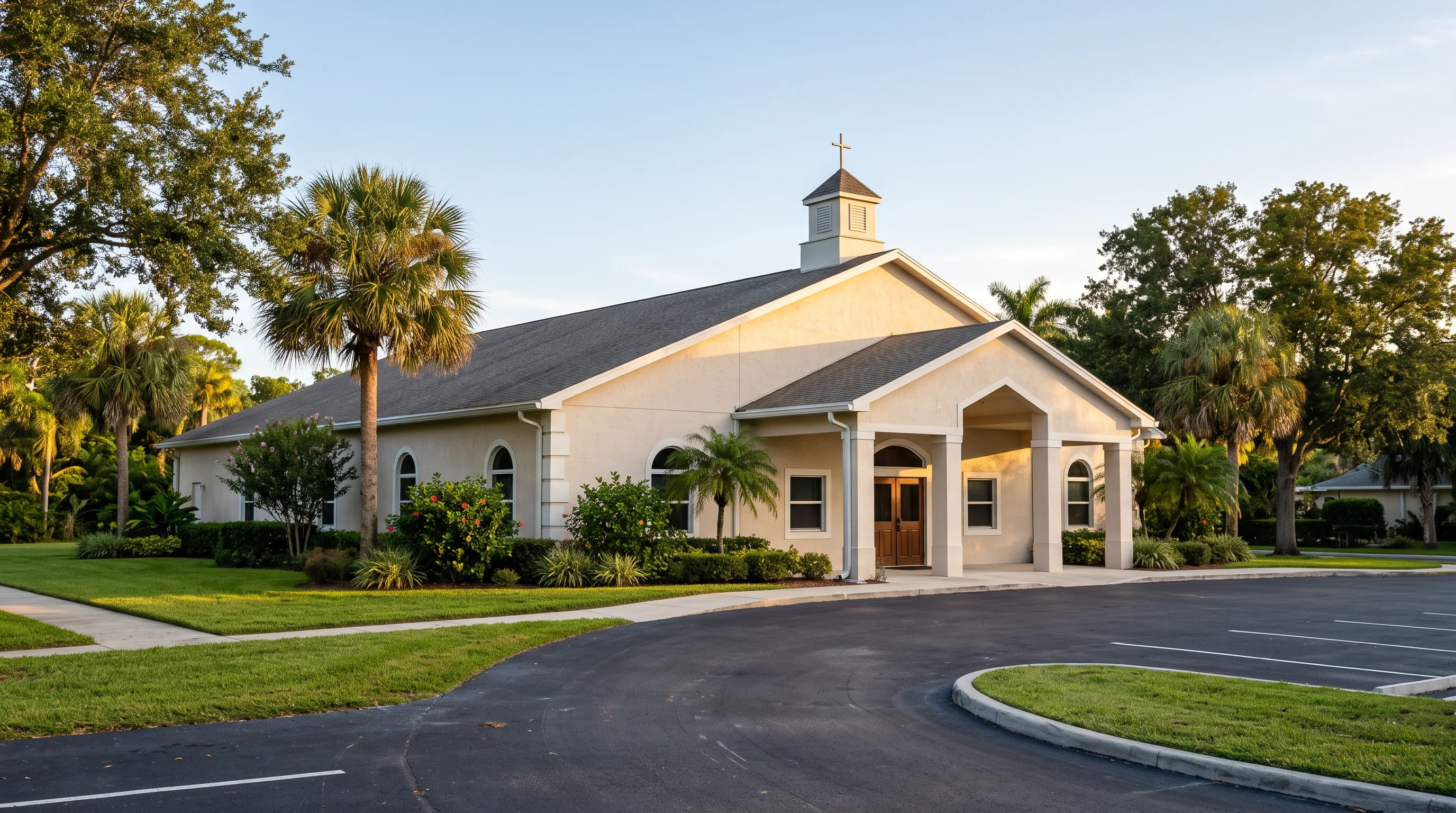
Properties · Religious facility
Religious facility
An assembly building read on capacity and constraint. What the room holds, what the site can park, and what either could become.
A religious facility is read at the assembly room first. Seated capacity, sightlines, ceiling height and the width of the egress paths set what the building can hold, and the ancillary spaces — classrooms, offices, a kitchen, a hall — decide how much of the week it is used rather than one morning of it.
Parking is usually the binding constraint, and it is a code question before it is a convenience one. The ratio a jurisdiction requires against assembly seating is often what caps the room, so a congregation that has outgrown its building may have outgrown its parking field first. Shared or off-site arrangements can relieve that, and their terms are part of the property, not a footnote to it.
Reuse is the harder read and the honest one. Assembly improvements are specific, the sanctuary volume is difficult to subdivide, and permitted uses on the parcel may be narrower than the building suggests. A property in this class is worth what its site and its shell support under the zoning that actually applies — which is a question answered at the counter, with the code in hand, not from a listing.
On market numbers
When a market claim appears on this site it carries its date and its source. When there is no source, there is no claim — current figures belong to the conversation, where they can be shown.